Precious stones of the month of March - aquamarine and bloodstone
AQUAMARINE STONE, STONE OF COURAGE
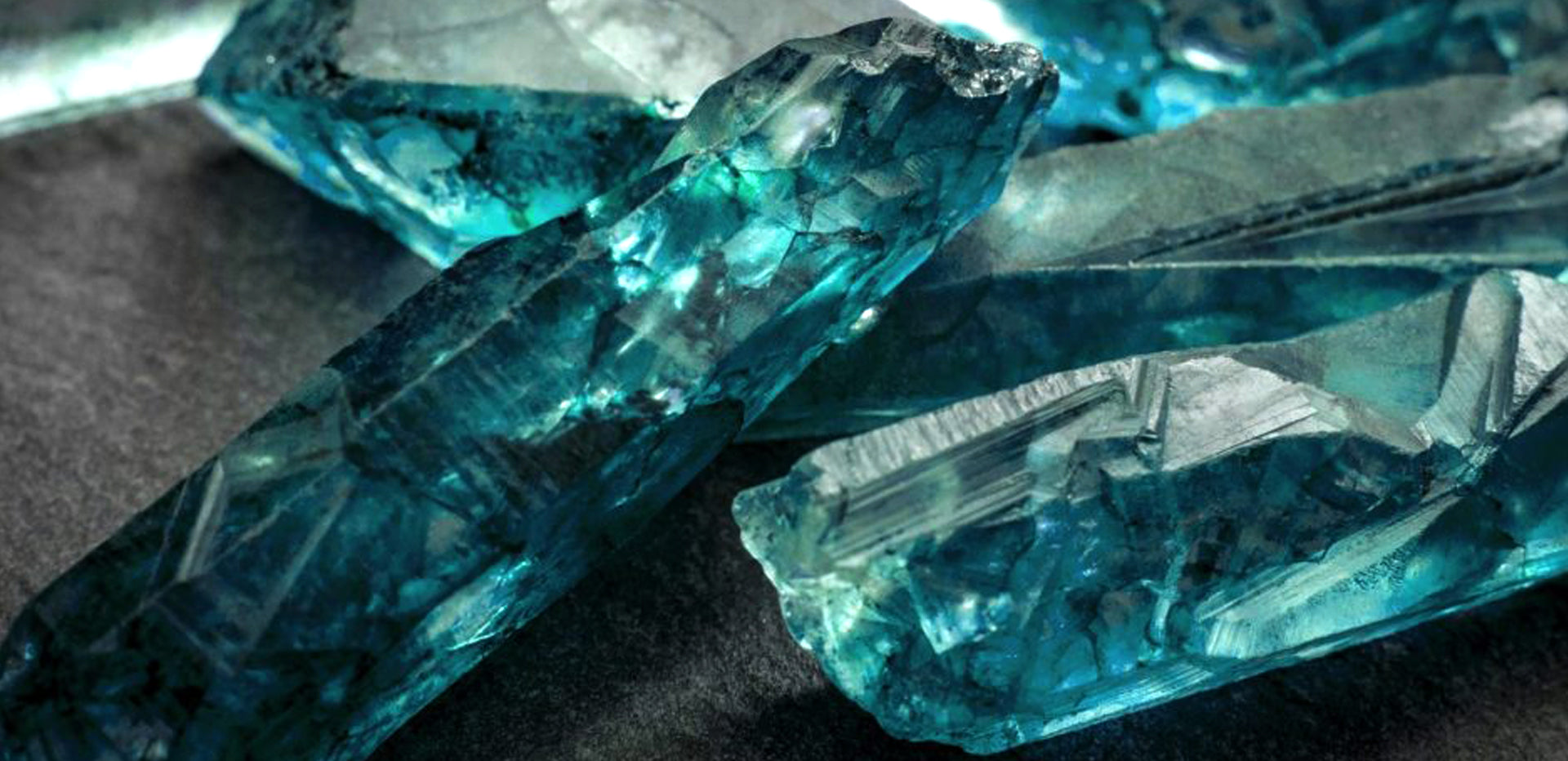
One of the birthstones for the month of March is aquamarine, a beautiful stone in a light blue shade with a hint of green, renowned for its calming and soothing properties. In ancient times, this blue-water stone was believed to protect sailors on their ocean journeys.
The colors of the sea captured in a single piece of jewelry
The aquamarine stone is a semi-precious gemstone characterized by the colors of the sea (from Latin, "aqua" for water and "marina" for sea) and is usually found in shades ranging from light blue to a deep saturated blue. The soothing blue-green hues of the watery depths are forever captured in these jewels.
Aquamarine is a mineral beryl that forms from magma, inside the Earth. Beryl has many varieties of beautiful gemstones: intense green emerald, aquamarine, golden-yellow heliodor, red beryl – a rare mineral, and pink morganite.
Where is aquamarine found?
The Brazilian state of Minas Gerais has been an important source of aquamarine for the last two centuries. If you ever think of traveling there, you will find a panorama of ever-changing landscapes: rocky hills, rivers, and bushes dominate the central and eastern regions; savannas, forests, and springs adorn the western part; and lush green hills roll to the south. Aquamarine stones are found in hard rocks and pegmatite deposits in the eastern portion of the state, near the jewelry center of Teófilo Otoni.
Aquamarine birthstones are also mined in Kenya, Madagascar, Nigeria, Zambia, and Mozambique, as well as in other parts of Africa. American sources include the Mount Antero area in Colorado (the state gemstone) and Riverside and San Diego counties in California. Additionally, aquamarine has been found in China, Myanmar, Russia, and Ukraine.
The history and meanings of aquamarine, the precious stone of March
Ancient sailors believed that aquamarine talismans, engraved with the likeness of the sea god Neptune, protected them from the dangers of the ocean and drowning. According to legends, the tails of mermaids were made of aquamarine, which is why the gemstone was later called "the treasure of the mermaids," a jewel of the seas that calms the waves and keeps sailors safe at sea.
The aquamarine stone is not only the birthstone for March, but the gemstone is also given as a gift for the 19th wedding anniversary. In more recent history, in 1936, the government of Brazil presented First Lady Eleanor Roosevelt with a rectangular dark blue aquamarine weighing 1,298 carats (ct). It was the largest of two faceted stones from a single piece of aquamarine, which, impressively, weighed 1.3 kilograms. It is now housed at the Franklin D. Roosevelt Presidential Library and Museum in Hyde Park, New York.
Perhaps due to its connection with water, the aquamarine stone emanates a calming and soothing influence and helps the wearer remain more balanced and clear-minded in stressful situations.
Many cultures said that aquamarine had a relaxing influence on land as well, especially on married couples, where it could rekindle love. It is also a symbol of eternal youth.
The healing energy of aquamarine is linked to the throat chakra and helps develop verbal communication and self-expression. Place the aquamarine stone under the full moon to restore its appearance and renew its energy.
Aquamarine jewelry makes a wonderful gift to remind someone dear to be confident and courageous in all situations.
What is this traditional birthstone for the month of March?
The bloodstone crystal, also known as heliotrope, is a variety of chalcedony (quartz used as a semi-precious stone in making certain art objects) that is traditionally semi-translucent to a dark green shade resembling jasper with red iron oxide inclusions, from hematite.
These inclusions resemble blood spots, hence the name of this crystal. The inclusions can also be of other colors, such as yellow or white, but red is the most well-known and popular color.
The mythical properties of bloodstone
Bloodstone is an ancient material that was used by the Babylonians (before 539 BC) to produce amulets and talismans with healing properties. The ancient Egyptians believed that bloodstone could make an individual stronger and more cunning in battle, perhaps even invisible to their enemies.
Throughout history, bloodstone has been associated with the ability to control the weather, predict the future, win battles in court, and enhance creativity. In fact, it was so cherished for its properties that many used the stone in jewelry, signet rings, and even small cups or statues.
The history and meanings of bloodstone: magical stone or lucky talisman?
The alternative name heliotrope for the bloodstone crystal comes from the ancient Greek word meaning "to turn the sun." In ancient times, it was said that these crystals could turn the sun red if placed in water, and in the Middle Ages, they were associated with the crucifixion of Christ. According to legend, when Christ was crucified, blood dripped onto the green earth and formed this red-green stone.
Many metaphysical properties have been attributed to this birthstone of March. These include increasing resilience, granting invisibility, and maintaining health and youth. In modern times, many consider the semi-precious bloodstone to be a lucky talisman, as athletes and others who wish to excel in strength and power use it. On the other hand, in present-day India, fine bloodstones can be crushed into a powder and used as an aphrodisiac.
The bloodstone crystal is linked to the root chakra or focal point of dynamic activity, which is associated with feelings of safety and grounding.
Where is bloodstone crystal found?
Most bloodstones used today are mined and cut in India. Other sources of bloodstone embedded in rocks or riverbeds include countries such as Brazil, Australia, Germany, the United States, Italy, China, and South Africa.
In the United States, small deposits of this crystal have been found in California, Nevada, Oregon, and Washington. Bloodstones form at dark depths and low temperatures in fractures and cavities due to precipitation from silicon-rich groundwater.
Although the bloodstone crystal does not have the same beauty as aquamarine, many admire and seek it for its special properties. Bloodstones used in jewelry are usually cut in cabochon style for a spectacular visual effect, although some striking specimens are faceted.
The bloodstone crystal is an ideal gift for the birthday of a loved one who would appreciate a reminder of their strength.